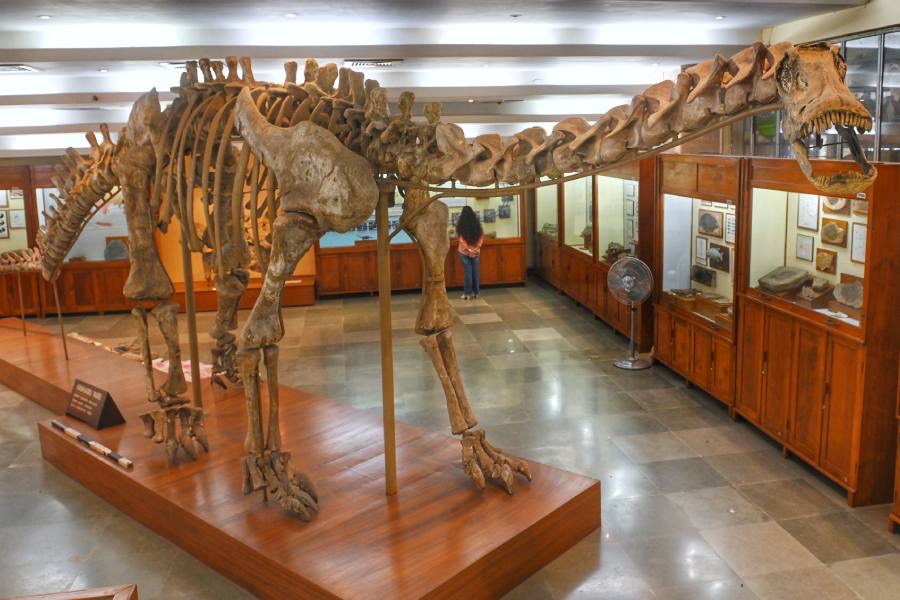
In a fascinating convergence of paleontology and classic literature, a newly discovered species of long-necked, plant-eating dinosaur from the Jurassic period has been officially named Barapasaurus tagorei in honor of India’s Nobel laureate, Rabindranath Tagore. The remarkably preserved fossils—uncovered during a joint scientific expedition by the Geological Survey of India (GSI) and the Indian Statistical Institute (ISI) in the Pranhita-Godavari valley of Telangana—date back approximately 180 million years. The naming choice honors Tagore’s profound, lifelong philosophical fascination with deep time, the evolution of the cosmos, and the ancient interconnected history of the natural world.
Beyond a simple tribute to his cultural legacy, the naming highlights Tagore’s deep personal ties to the pioneering scientific institutions that unearthed the prehistoric giant. Researchers chose the specific epithet tagorei to commemorate the centennial celebration of Visva-Bharati University in Santiniketan, an institution Tagore founded with a vision of blending arts, humanities, and deep scientific inquiry. The discovery of this early sauropod not only provides critical data regarding the global evolution and structural diversification of massive dinosaurs during the Early Jurassic era but also serves as a brilliant reminder of Tagore’s enduring impact on both the artistic imagination and India’s scientific heritage.